Upcoming Events
Explore our collection of memorable moments and achievements captured over the years.

International Workshop on Nonlocal Mechanics Approaches for Modelling Localized Deformations (NMAMLD 2026), 14–16 December 2026
The International Workshop on Nonlocal Mechanics Approaches for Modelling Localized Deformations (NMAMLD 2026), scheduled for 14–16 December 2026, focuses on advanced modelling techniques for localized deformation, damage, fatigue, and fracture in engineering materials. Nonlocal mechanics incorporates intrinsic length scales to enable accurate, mesh-independent simulation of strain localization and crack evolution under quasistatic, dynamic, and cyclic loading. The workshop will cover integral, gradient-enhanced, and phase-field approaches applied to metals, concrete, and composites. Building on successful editions in 2020 and 2022, NMAMLD 2026 will bring together global experts to share insights, foster collaboration, and advance research in computational mechanics.
Read More →Catastrophic Risk Modeling: Structural Damage Assessment
This talk explores catastrophic risk modeling with a focus on structural damage assessment, highlighting how advanced analytics, simulation models, and real-world data are used to predict and quantify damage from natural hazards such as earthquakes, cyclones, and floods. It will also discuss the integration of engineering principles with risk modeling frameworks to support resilient infrastructure design and disaster preparedness strategies. The session will be delivered by Suryanarayana Raju, Senior Vice President at Verisk, who brings extensive industry experience in catastrophe modeling, risk analytics, and insurance-based loss estimation, offering valuable insights into real-world applications and decision-making processes.
Read More →Development of Scientific Landfills – Case Study of Hyderabad, India
This talk highlights the development of scientific landfill systems through a Hyderabad case study, showcasing sustainable waste management practices and modern engineered containment solutions. It will be delivered by Dr. Eshwar Konkati, an experienced Civil and Structural Engineering professional with over 26 years of expertise in infrastructure, environmental projects, and large-scale project management.
Read More →Online talk by Dr. Slaven Conevski, Consultant, Multiconsult (MC), Oslo, Norway.
When Sediment Becomes the main issue in Hydraulic Projects: Monitoring, Modelling, and Managing in Hydropower and Hydraulic Projects
Read More →“Weather Intelligence for Aviation & Next-Gen Aircraft with AI-Enhanced Nowcasting & Drone Ecosystem Intelligence” by Dr. Suman, DM-Airtech .
This talk explores how advanced weather intelligence is transforming aviation, with a special focus on drones and emerging Urban Air Mobility systems. It highlights cutting-edge approaches like AI, IoT sensor fusion, and CFD-based downscaling to deliver hyperlocal weather insights essential for safe and efficient low-altitude operations.
Read More →Compressed Biogas (CBG): Engineering the Transition Towards a Carbon-Neutral Energy Landscape in India
This talk explores the engineering and deployment of Compressed Biogas (CBG) as a key renewable energy solution, covering feedstock processing, anaerobic digestion, and gas purification technologies. It will be delivered by Dr. Ramesh Daryapurkar, a globally renowned expert with 40+ years of experience in biogas systems and large-scale environmental engineering projects.
Read More →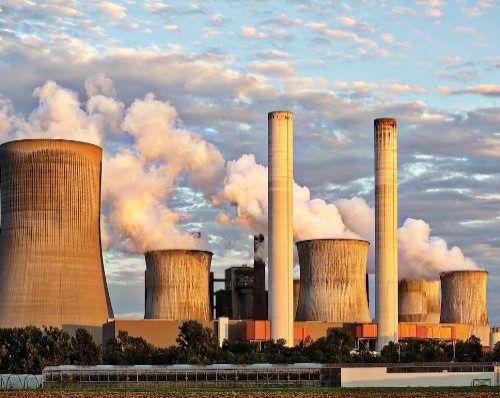
Industrial Seminar on Nuclear power plants influenced by disasters: Implications for for small modular reactors (SMR)
The global energy landscape is rapidly evolving, with nuclear power continuing to play a critical role in achieving low-carbon and reliable energy systems. However, major incidents such as the Fukushima Daiichi Nuclear Disaster and the Chernobyl Disaster have significantly shaped public perception, regulatory frameworks, and engineering approaches to nuclear safety. In this insightful talk, Kenichi Tsuda of Shimizu Corporation will explore how past nuclear disasters have influenced the design, construction, and risk assessment of modern nuclear power plants. The session will focus particularly on the emerging role of Small Modular Reactors (SMRs), which are being promoted as safer, more flexible, and cost-effective alternatives to traditional large-scale reactors.
Read More →Hydropower Infrastructure at TG-GENCO: Performance and Critical Challenges
An upcoming session on hydropower will highlight the role of Telangana State Power Generation Corporation Limited in sustainable energy development. The talk will cover hydropower infrastructure, system components, and key engineering challenges through case studies of the Srisailam Left Bank Hydropower Project and Nagarjuna Sagar Hydropower Project. The session will be delivered by Dr. T. Naveen Kumar and organized by Seetha N.
Read More →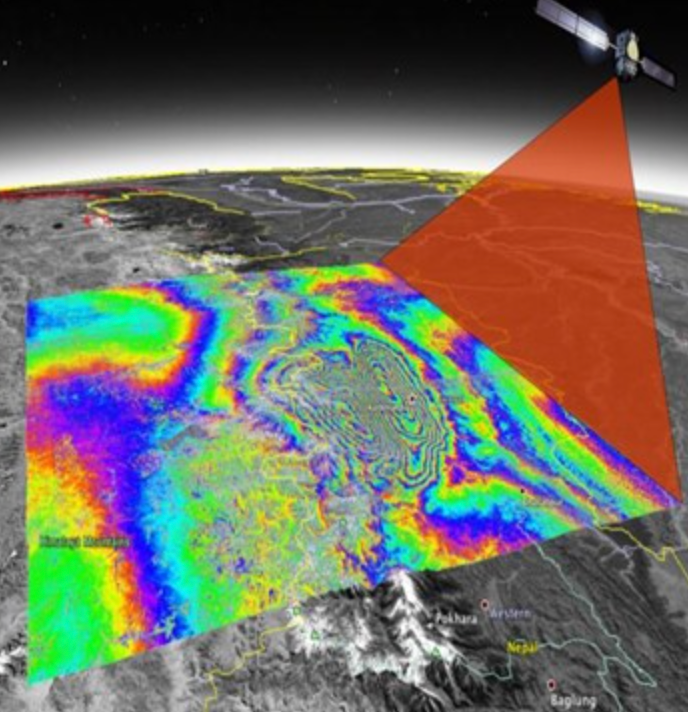
Space Technology for Disaster Resilience and Further Applications
In this lecture, satellite-based Earth observation through intelligent resource management is introduced. This lecture highlights our smart tasking framework and its practical application to the Japan Disaster Charter, together with the upcoming integration of AI Orchestration technologies. Beyond imaging from the satellites, we showcase the utility of satellite positioning technology in atmospheric sensing—monitoring ionosphere and troposphere through GNSS signals for disaster risk reduction. This lecture also intends to invite international collaboration to apply these technologies to social challenges in India.
Read More →