Structural Engineering
.png)
Vicat apparatus
The Vicat Apparatus is used to determine the setting time and consistency of cement. It measures how long it takes for cement to start and finish hardening, which is crucial for ensuring the quality and workability of cement
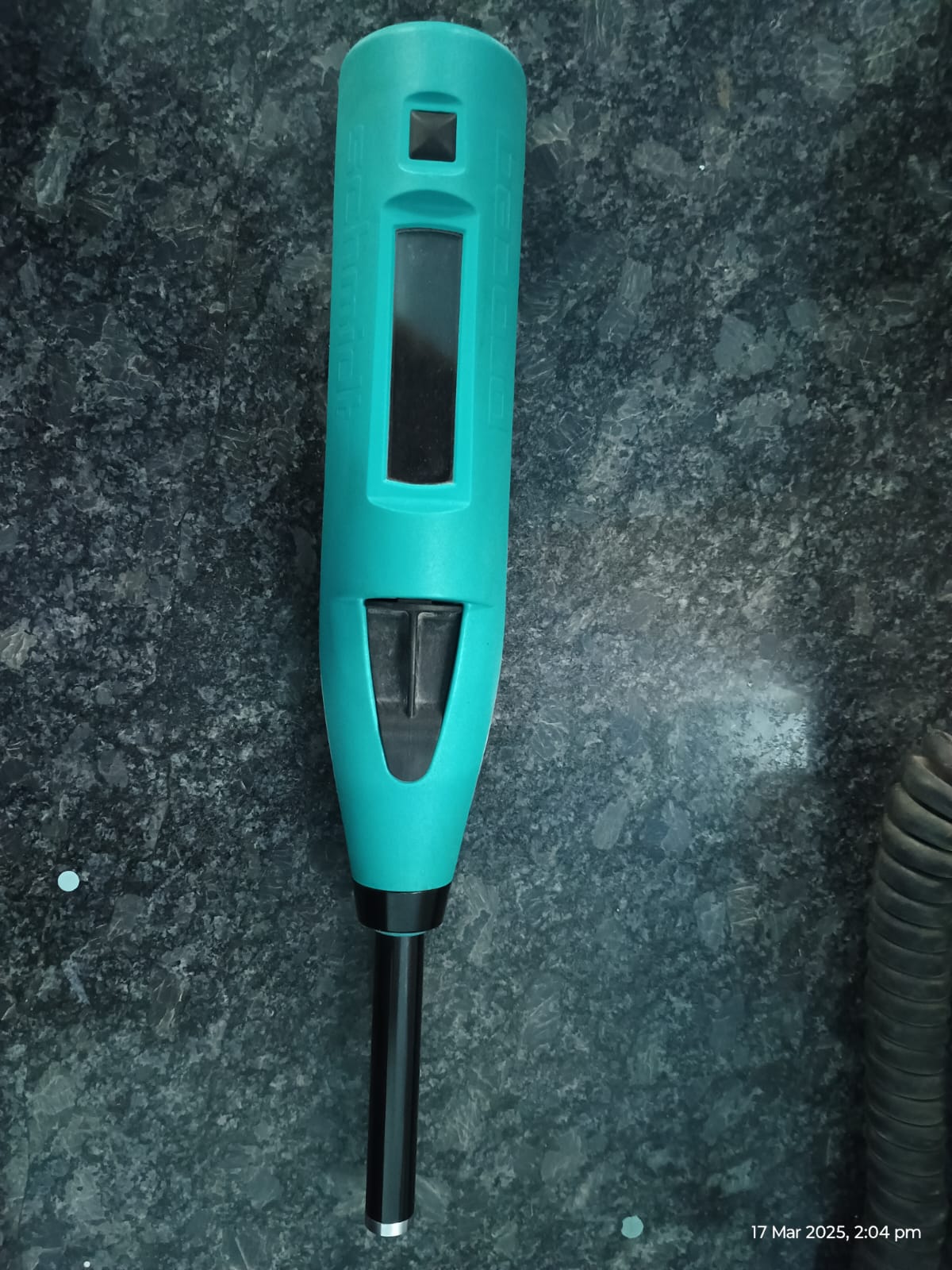
Rebound Hammer
It is used for non-destructive testing to assess the compressive strength of concrete by measuring the rebound of a spring-controlled mass after striking the concrete surface.
.png)
Impact testing Apparatus
For the determination of the aggregate impact value of coarse aggregates as per IS:2386.
-1.png)
Cylindrical Metal Measures
For the determination of loose and rodded bulk density as per IS:2386.
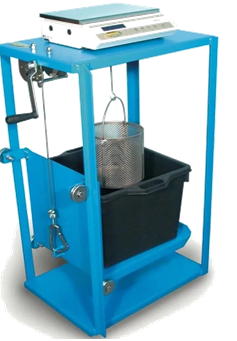
Wire basket (along with watertight container and weighing balance) and pycnometer
For the determination of water absorption and specific gravity of aggregates.
.png)
Slump Cone
For the determination of the workability of fresh concrete.
.png)
Concrete cube moulds
For the casting of concrete cubes to determine the compressive strength of concrete.
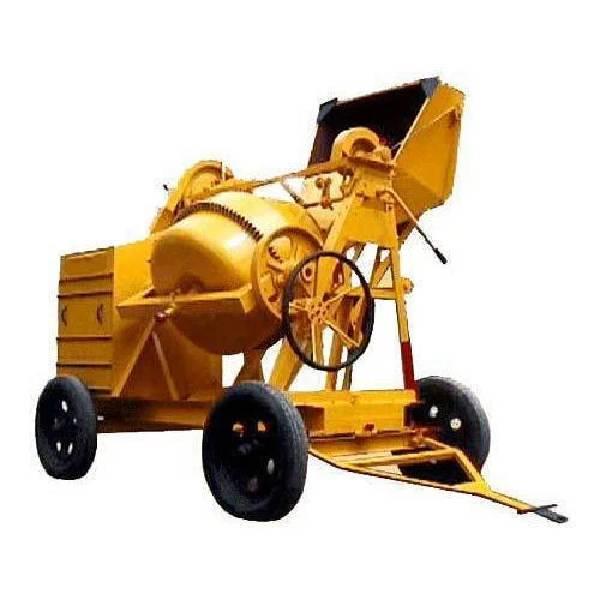
Concrete Mixer Machine
The primary function of a concrete mixer is to homogeneously combine the ingredients necessary for producing concrete.
.png)
Bulk density cylinders
Determines the bulk density or unit weight of aggregates.
.png)
Sieve analysis of coarse aggregate and fine aggregate
To carry out sieve analysis and particle size distribution of fine and coarse aggregates as per IS:2386.
.png)
Los Angeles Abrasion Apparatus
For the determination of the abrasion value of coarse aggregates as per IS:2386.
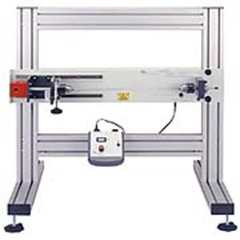
TORSION OF CIRCULAR SECTION
The relationship between specimen length, torque and angular deflection The behavior of specimens of different materials and sections General torsion theory Shear modulus
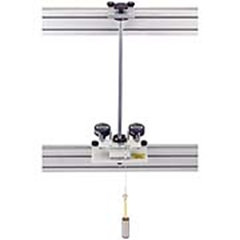
Unsymmetrical Bending and Shear Centre
Horizontal and vertical deflection of different asymmetrical sections at various angles Horizontal and vertical deflection of different asymmetrical sections at various loads The relationship between the vertical and horizontal deflections and the principal moments of area of each section Shear center of various asymmetrical sections
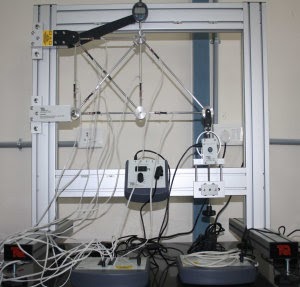
Pin-Jointed Frameworks
Study of strains, stresses, forces, and deflections in various frameworks, including a Warren girder and roof truss. Comparison of different frameworks.
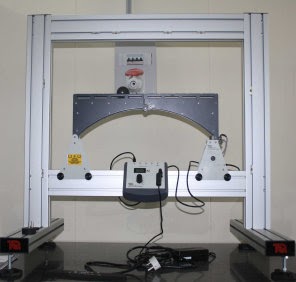
Three-Pinned Arch
Demonstration of the characteristics of a three-pinned arch. Examination of the relationship between applied loads and the horizontal thrust produced by a simply determinate arched structure.
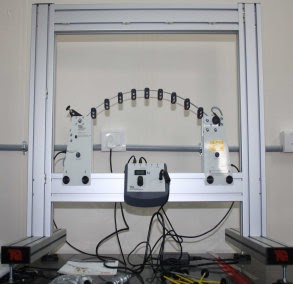
Fixed Arch
Demonstration of the characteristics of a fixed arch. Examination of the relationship between applied loads and the horizontal thrust produced by a fixed (redundant in three degrees) arched structure. Comparison of fixed-arch behavior with simplified theory based on the secant assumption.
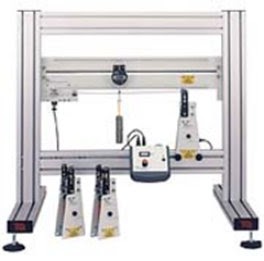
CONTINUOUS AND INDETERMINATE BEAM
Reactions of a two-span continuous beam. Reactions and fixing moments of a fixed beam and a propped cantilever. Reactions and fixing moments of a propped cantilever with a sinking support. Relationship between load and deflection for beams and cantilevers.
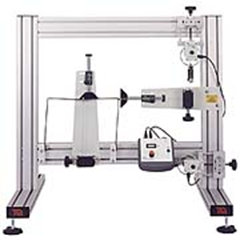
Plastic bending of portals
A rectangular portal with a uniform section. A rectangular portal with a non-uniform section.
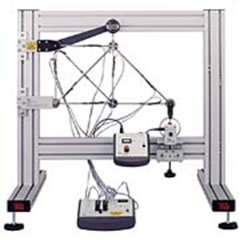
Redundant Truss
statically determinate framework. A statically indeterminate framework.
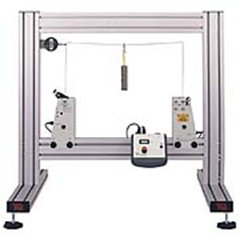
Frame Deflections and Reactions
Euler buckling loads. Relationship between strut length and collapse load. Relationship between end-fixing conditions and collapse loads. Nature of deflection and deflected shapes with various end-fixing conditions.
.jpg)
Loading and Buckling of Struts
Euler buckling loads. Relationship between strut length and collapse load. Relationship between end-fixing conditions and collapse loads. Nature of deflection and deflected shapes for various end-fixing conditions.
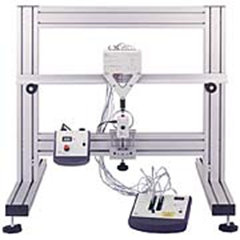
Bending Moments and Shear Force in a Beam
Bending moment variation at the point of loading. Variation of bending moment away from the point of loading. Examination of various other loading cases, including loads traversing the beam. Shear force variation with an increasing point load. Variation of shear force for various loading conditions.
.png)
X- ray Fluorescence
The XRF is of Bruker make. It is used for the qualitative analysis of a compound. It gives the oxide composition of each element present in the compound under analysis .
.png)
Mercury Intrusion Porosimeter
The mercury intrusion porosimeter is used for the determination of pore size distribution. The non-wetting liquid contact technique is used to determine the pore size distribution in the samples. The porosity of the material can be measured under controlled pressure conditions. The automated loading mechanism operates at both high and low pressures for the purpose of mercury intrusion into the pores.
.png)
X- ray Diffractometer
The XRD is a powder-based Bragg–Brentano geometry XRD of Bruker make. It works on the principle of X-ray diffraction and is used for quantitative analysis, which is performed based on the crystal structure of each element present in the compound under analysis.
.jpg)
3-D Printer
The 3D concrete printer is a robust and versatile extrusion-based concrete printing system designed for precision and adaptability. This gantry-type printer integrates advanced components to enable efficient and high-quality concrete printing for various applications.
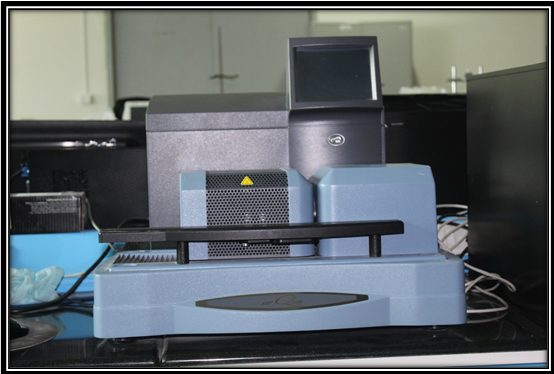
Thermo Gravimetric Analyzer
GA is used to determine the evaporable and non-evaporable water content and Calcium Hydroxide (Ca(OH)2)content of hydrated cement paste.
.png)
Calorimeter
An Iso-thermal Calorimeter by TA Instruments is present in the lab. It gives the reaction kinetics of the sample right from the beginning of hydration. It is used to understand the rate and extent of the hydration.
.png)
Scanning Electron Microscope
SEM uses a microscopic lens which enables one to observe the microscopic structure of the solid sample. The SEM is of Phenom make and PRO X model.
.png)
Rheometer
Rheometer is used to determine the early-age properties of a hydrated sample. The viscosity, thixotropy and the evolution of stiffness of the material can be determined. The perfectly equipped rheometer is of model AR-G2 procured from TA instruments. The equipment consists of magnetic bearing, along with continuous air and water supply for the purpose of pressure and temperature maintenance in the system.
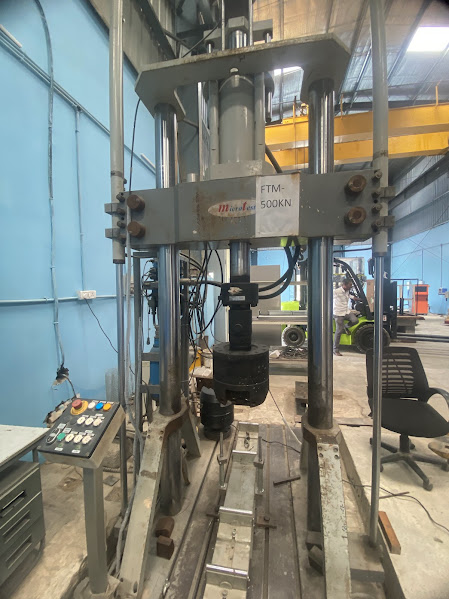
Micro Test FTM 500kN
Fatigue Testing Machine (±500 kN capacity), capable of fatigue testing specimens made of cement materials and cement-based structural components, composite materials and composite-based structural components, reinforced concrete, masonry, and steel sections.
.png)
CONTROLS CTM 5000kN
Compression tests for cubes up to 150 mm and cylinders up to 150 mm in diameter. Splitting tensile strength tests of concrete.
.png)
CONTROLS Flexural Testing Machine — 300 kN
Three-point and four-point bend tests, and shear tests. Energy absorption test for square and circular panels of 600 mm.
.png)
Instron 30 kN UTM
Table Mounted Materials Testing System with testing speed range from 0.005 mm/min to 500mm/min.
.jpeg)
Microtest 3000 kN compression testing machine
Servo-hydraulic, computer-controlled compression testing machine with a vertical testing clearance of 2000 mm.
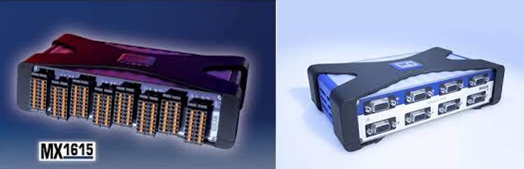
HBM QuantumX: The Universal and Distributable Data Acquisition System
The QuantumX data acquisition system (DAQ) is a highly precise, universal, and reliable data acquisition system. QuantumX can be perfectly combined with HBM's sensors and the Catman software to provide a complete measurement and testing solution.
.jpeg)
MTS Pseudo-dynamic Test System
Hydraulic actuators have dynamic force capacities of 1000 kN and 250 kN. Testing speeds range from 0.005 mm/min to 500 mm/min.
.jpg)
UTM Fine spavy 2000kN
The UTM has a wide range of test applications. Different types of materials can be tested for various purposes, such as tension, compression, and shear.
.jpeg)
HEICO Large-Scale CTM, 12 000 kN
12 000 kN compression testing machine with 2 meters of daylight for testing columns, bridge bearings, and similar components.
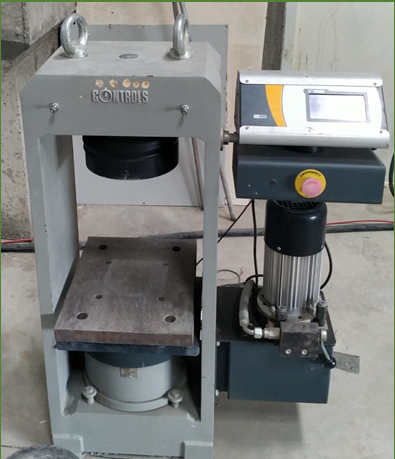
CONTROLS CTM 2000kN
The automatic compression testing machine is used for testing specimens with a maximum load capacity of 2000 kN. This multipurpose compression tester has been designed for various applications in which a limited maximum load is required, together with a large testing space — for instance, for compressive strength testing of lightweight concrete and soil–cement specimens, using suitable accessories if necessary. It is also ideal for testing high-strength cement specimens and refractories.
.png)
MTS Pseudo Dynamic Test System
Hydraulic Actuators having dynamic force capacities of 250kN & 100kN. Testing Speed Ranges from 0.005mm/min to 500mm/min.
.jpg)
MTS Pseudo Dynamic Test System 500kN
Hydraulic actuators have dynamic force capacities of 500 kN. Testing speeds range from 0.005 mm/min to 500 mm/min.
 (1).png)
MTS landmark FTM 250kN
Fatigue Testing Machine (±250 kN capacity) can perform: High-cycle fatigue tests Low-cycle fatigue tests Environmental testing Tension tests Compression tests Bending tests
.png)
100 mm Dia Split-Hopkinson Pressure Bar
Investigation of the behaviour of specimens under high strain-rate loading. Evaluation of the influence of strain rate on the compressive strength of specimens.

Workstations for Mtech & Phd Stduents
This lab is designated for research purposes for M.Tech and Ph.D. students. Students from all structural engineering disciplines conduct simulations and analyses in this lab.